How Do You Know if Your Placenta Erupts
Overview
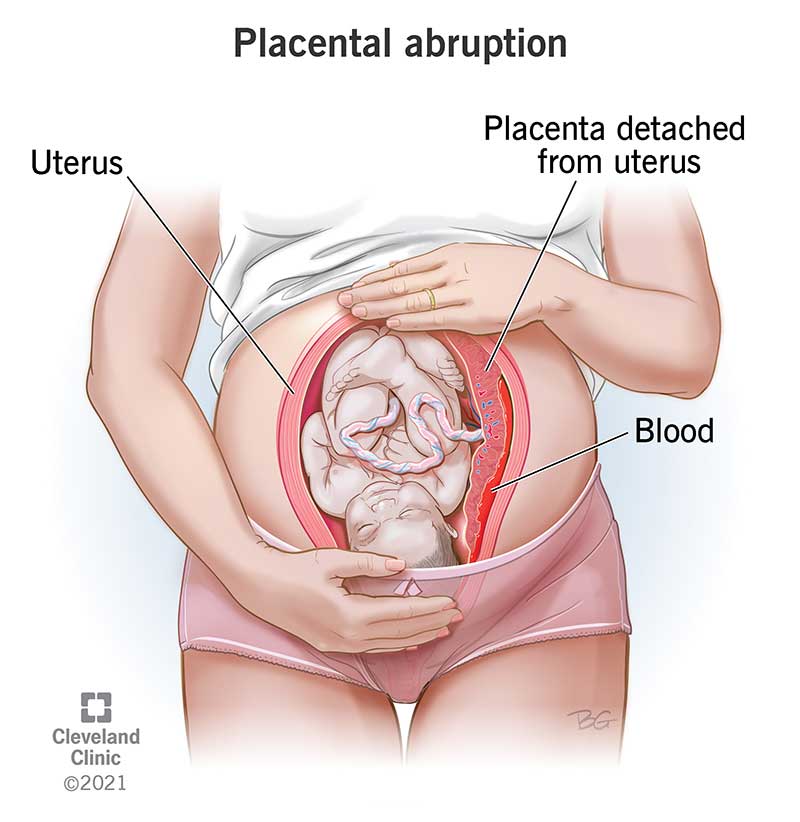
What is a placental abruption?
Placental abruption is a complication of pregnancy that happens when the placenta separates from your uterus before your baby is built-in. The placenta is a temporary organ that connects a growing infant to your uterus during pregnancy. It attaches to the wall of your uterus, usually on the top or side and acts equally a lifeline that gives nutrients and oxygen to your baby through the umbilical cord. The placenta also removes waste product from your baby's blood.
In placental abruption, the placenta may completely detach or partially detach. This tin can subtract the amount of oxygen and nutrients to your baby and cause heavy haemorrhage in the mother. Placental abruption is a serious status that requires medical handling.
What are the unlike types of placental abruption?
- A partial placental abruption occurs when the placenta does non completely disassemble from the uterine wall.
- A complete or total placental abruption occurs when the placenta completely detaches from the uterine wall. There is usually more vaginal bleeding associated with this type of abruption.
- Revealed placental abruptions have moderate to severe vaginal bleeding that you lot can see.
- Concealed placental abruptions accept little or no visible vaginal bleeding. Blood is trapped between the placenta and uterine wall.
What is the difference between placental abruption and placenta previa?
In placenta previa, the placenta is roofing all or part of the mother'due south cervix. Information technology'south too called low-lying placenta. Call up of information technology every bit an obstacle that'south blocking the exit from the uterus. Fifty-fifty though the placenta is in a complicated position, it's all the same fastened to the uterus. When the placenta detaches from the uterus, this is a placental abruption. Both conditions can crusade vaginal haemorrhage during pregnancy and labor.
How common is a placental abruption?
About ane out of 100 pregnancies has placental abruption. This condition is unremarkably seen in the third trimester, only information technology can happen any time later on 20 weeks of pregnancy upward until delivery.
What are the furnishings of placental abruption?
Placental abruption can be life-threatening to your infant and sometimes to yous. Complications from a placental abruption include:
For baby:
- Premature birth.
- Depression nativity weight.
- Growth issues.
- Brain injury from lack of oxygen.
- Stillbirth.
For female parent:
- Blood loss.
- Blood clotting issues.
- Blood transfusion.
- Hemorrhage.
- Kidney failure.
Symptoms and Causes
What causes placental abruption?
The cause of placental abruption is often unknown. Sure lifestyle choices or abdominal trauma tin increase your risk for placental abruption.
What are the risk factors for placental abruption?
You lot are at higher chance for placental abruptions if you have any of the following:
- Trauma or injury to your uterus (like a car blow, fall or blow to the stomach).
- Previous placental abruption.
- Multiple gestations (twins or triplets).
- High blood pressure (hypertension), gestational diabetes or preeclampsia.
- If you lot smoke or have a history of drug use.
- Short umbilical cord.
- Maternal age 35 or greater.
- Uterine fibroids.
- Thrombophilia (a blood clotting disorder).
- Premature rupture of membranes (the h2o breaks before your baby is full term).
- Rapid loss of the amniotic fluid.
What are the signs and symptoms of placental abruption?
Each person can have unlike symptoms of placental abruption. However, the most common symptom is vaginal bleeding with cramping during the third trimester of pregnancy. Symptoms or signs can besides include:
- Abdominal hurting.
- Uterine contractions that are longer and more intense than average labor contractions.
- Uterine tenderness.
- Backache or dorsum pain.
- Decreased fetal motion.
Vaginal bleeding can vary and is non an indication of how much the placenta has separated. In some instances, there could be no visible bleeding because the blood is trapped between the placenta and the uterine wall. Pain can range from mild cramping to strong contractions and frequently begins suddenly.
These symptoms can resemble other pregnancy weather. Always consult with your healthcare provider for a diagnosis.
Do you always bleed during a placental abruption?
Most of the time, you will see some blood during a placental abruption. In the event of a curtained abruption, the blood will exist behind the placenta. In that case, at that place volition be no bleeding. In other cases, the abruption develops slowly, which tin crusade occasional, low-cal bleeding.
Talk to your healthcare provider about any vaginal bleeding you feel during your pregnancy.
What does placental abruption feel similar?
You may experience sudden or sharp pain, cramping, or tenderness in your lower pelvic region or back during a placental abruption. You could as well feel your baby move less. You should discuss these symptoms with your healthcare provider immediately.
What are the starting time signs of a placental abruption?
The most common symptom of a placental abruption is vaginal haemorrhage, although you lot will not e'er bleed. You may likewise have sudden, ongoing pain in your abdomen or back.
Diagnosis and Tests
How is a placental abruption diagnosed?
Placental abruption is diagnosed through an exam and monitoring. Yous may be admitted to the infirmary depending on the severity of the abruption or you may be able to rest at dwelling house. Your healthcare provider will:
- Enquire how much haemorrhage has occurred.
- Enquire where you lot feel pain and how intense the pain is.
- Ask when symptoms started.
- Monitor your claret pressure.
- Monitor the baby'due south heart rate and move.
- Monitor your contractions.
- Use ultrasound to locate the haemorrhage and to check your baby.
- Recommend blood or urine tests.
There are typically three grades of placental abruption a healthcare provider volition diagnose:
- Grade 1: Small amount of haemorrhage, some uterine contractions, and no signs of fetal or maternal stress.
- Class ii: Mild to moderate amount of haemorrhage, some uterine contractions, and signs of fetal stress.
- Grade three: Moderate to astringent bleeding or concealed bleeding, uterine contractions that practise non relax, abdominal pain, low maternal blood force per unit area, and fetal death.
It is important to discuss any symptoms or changes in symptoms with your healthcare provider.
Direction and Treatment
How is a placental abruption treated?
One time the placenta has separated from the uterus, information technology cannot be reconnected or repaired. A healthcare provider will recommend treatment based on:
- The severity of the abruption.
- How long the pregnancy is/gestational age of your unborn babe.
- Signs of distress from your unborn babe.
- Amount of blood you've lost.
Generally, the severity of the abruption and gestational historic period of your baby are the two most important factors:
If your baby is non close to full term:
- If it's too soon for your baby to exist born and your abruption is mild, you will be closely monitored until you accomplish 34 weeks of pregnancy. If your baby's eye charge per unit is normal and you're non haemorrhage, your healthcare provider may let y'all to go home to residuum. They may give you medication to help with your baby's lung development.
- If your abruption is astringent and the health of you or your babe are at run a risk, firsthand delivery may exist necessary.
If your baby is near full term:
- If your abruption is mild and the baby's heart charge per unit is stable, a closely monitored vaginal delivery is possible. This is generally determined around 34 weeks of pregnancy.
- If the abruption gets worse or yous or your infant are in danger at whatever time, the baby volition be delivered via emergency Cesarean section.
Prevention
Can I prevent a placental abruption?
Placental abruptions are typically unpreventable. You can reduce your gamble by:
- Not smoking or using drugs.
- Keeping your blood force per unit area at a good for you level.
- Keeping diabetes under command.
- Taking health and safety precautions similar wearing a seat chugalug.
- Reporting any abdominal trauma to your healthcare provider.
- Talking to your healthcare provider nigh any vaginal haemorrhage.
Outlook / Prognosis
What can I expect if I take a placental abruption?
This can vary depending on the severity of your symptoms and how far along y'all are in your pregnancy. You can expect to be monitored closely and often. Watch for any changes in symptoms and discuss them with your healthcare provider immediately.
What is my babe's survival rate after a placental abruption?
The two factors that bear on survival rate are gestational historic period at birth and the severity of the abruption. Early on detection, shut monitoring, and quick treatment can aid reduce complications.
Can I have another placental abruption?
You have about a fifteen% take chances of having another abruption in a future pregnancy. With two prior abruptions, this chance increases to about 25%. If you have had a previous abruption, delight let your healthcare provider know.
What are questions I should ask my healthcare provider?
Your healthcare provider should be able to answer your questions and fix y'all for handling of placental abruption. Here are some questions you might ask:
- Is my babe's life in danger? Is mine?
- What are my handling options?
- Can my babe be born now?
- How volition I know if my abruption is worsening?
- What are potential complications?
- Do I need additional tests?
Ofttimes Asked Questions
Tin sex activity cause a placental abruption?
Sexual intercourse is not a direct cause of placental abruption. In most cases, it'due south perfectly safe to take sexual practice during pregnancy. Activities with a loftier chance of falling or intestinal trauma should be avoided during pregnancy.
Can sneezing cause a placental abruption?
Sneezing is a normal affair your body does and is not a cause for placental abruption. Information technology cannot harm your babe in any mode. If you accept whatsoever concerns about frequent and forceful sneezing or coughing, reach out to your healthcare provider for guidance.
Tin smoking cause a placental abruption?
Smoking can increase your run a risk of many complications during pregnancy, including placental abruption. Enquire your healthcare provider about ways to quit smoking.
When do I call my healthcare provider if I suspect a placental abruption?
Call your healthcare provider immediately if are bleeding, cramping or experience pelvic hurting during your pregnancy, especially in the third trimester.
A notation from Cleveland Clinic
Placental abruption is an uncommon, withal serious status women tin can feel during pregnancy. Talk to your healthcare provider if you experience vaginal bleeding, pelvic pain or cramping. Placental abruption should exist diagnosed and treated promptly to ensure you lot and your baby are healthy.
Source: https://my.clevelandclinic.org/health/diseases/9435-placental-abruption
0 Response to "How Do You Know if Your Placenta Erupts"
Post a Comment